Saccharomyces Cerevisiae Study
Validating Hyperbolic Field Effects on a Model Biological Organism
Who We Are?
This research is conducted under patent KZ 2025/1095.1 (Fractal Biomedical System), filed by ASRP LLP (Baikonur, Kazakhstan), and is implemented within the logic of a reproducible interdisciplinary platform — the Fractal Biomedical System of Hyperbolic Fields. A key role is held by Valeria Ovsyannikova — Director of the Biomedical Research Department, founder of the holding, and Chief Biomedical Engineer — providing strategic leadership, laboratory protocol development, and direct execution of experimental procedures. Engineering implementation of emitters — with the participation of Aleksandr Ovseannikov. Software is developed at two levels jointly by Valeria Ovsyannikova and Denis Banchenko. Laboratory support — Galina Ovsyannikova, auxiliary tasks — Eva Ovsyannikova. Data processing — AI-driven platform (Kyryl Zmiienko, Mykhailo Kapustin). Scientific publication — Ivan Savelyev.Our Mission
Our mission is to complete the holistic integration of the physical model, engineering implementation, and biomedical experiment into a unified research structure. All stages of work are oriented towards subsequent scientific publication and independent verification of results. The study protocol is registered on the Open Science Framework: osf.io/Jgt3h. We aim to demonstrate that controlled exposure to a structured physical field causes measurable, reproducible changes in fermentation kinetics, metabolic activity, and temporal organization of biochemical reactions.Project Goal
The goal is to determine whether controlled exposure to a hyperbolic field causes measurable changes in fermentation kinetics, metabolic activity, and morphology of Saccharomyces cerevisiae. We use a randomized double-blind design, a multi-stage computer vision pipeline (Cellpose3, YeastSAM, AMiGA), and statistical analysis based on linear mixed models (LME). Success criteria — statistically significant differences (p < 0.05) in yeast fermentation and viability across exposure channels with a moderate effect size (d ≥ 0.4).Biomedical Fractal System Overview
A patented technology for informational management of biological processes based on reverse engineering of cells and hyperbolic field generators. Learn how HFS creates space-time structures in biological carriers to regulate cell division, metabolism, regeneration, and more.
Research Components
Measurement Protocols:
Primary metrics: fermentation rate, gas production, turbidity changes, time to visible activity onset, qualitative morphology (texture, growth patterns). Derived indices: FAI (AUC ratio), FDI (lag-phase difference), FPI (maximum growth rate ratio).
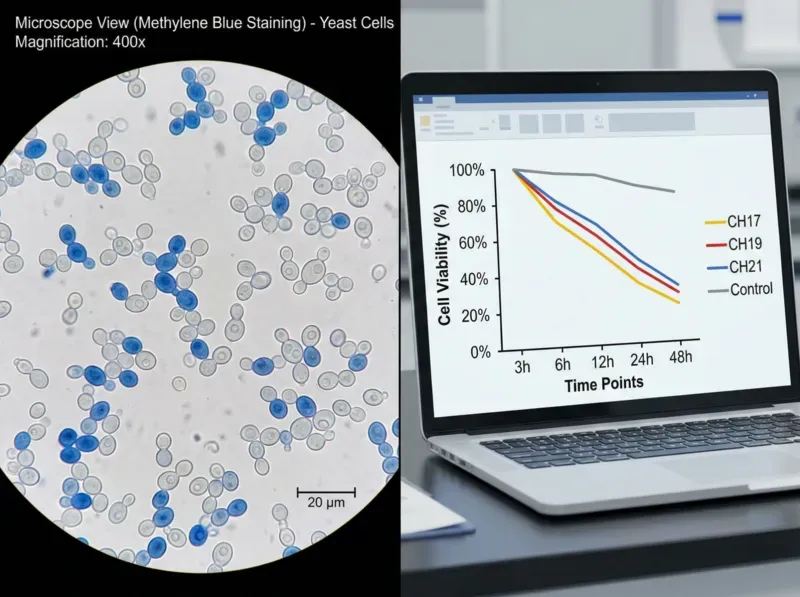
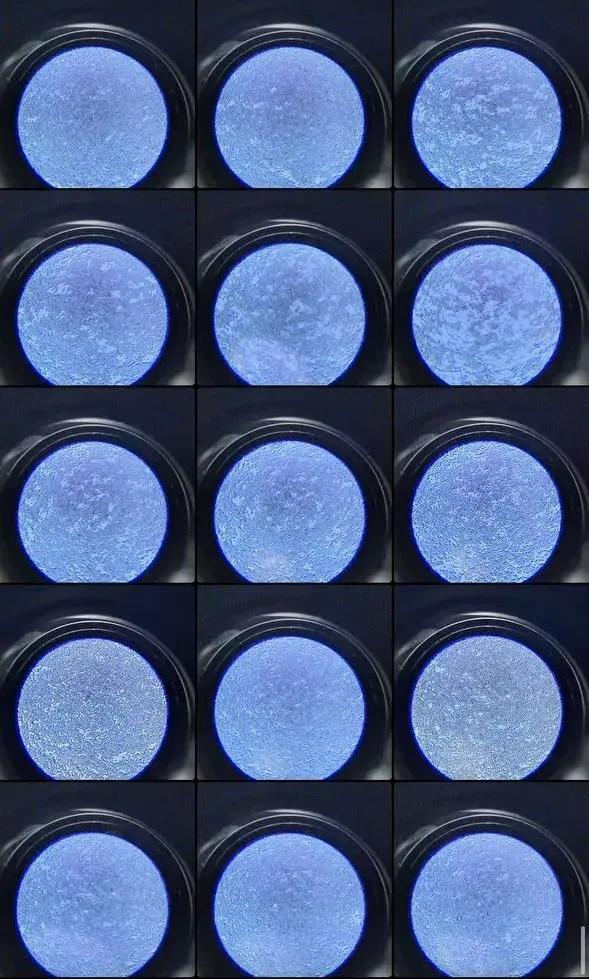
Methylene blue staining: 100 μl suspension + 100 μl solution (0.1 mg/ml). Incubation 5 min. Dead cells — blue, live — colorless. Budding cells with faint staining counted as live.
Observation schedule: before irradiation, immediately after, at 3h, 6h, 12h, 24h, 48h. At each stage — photography and microscopy. Staining — at 24h and 48h.
Experimental Design:
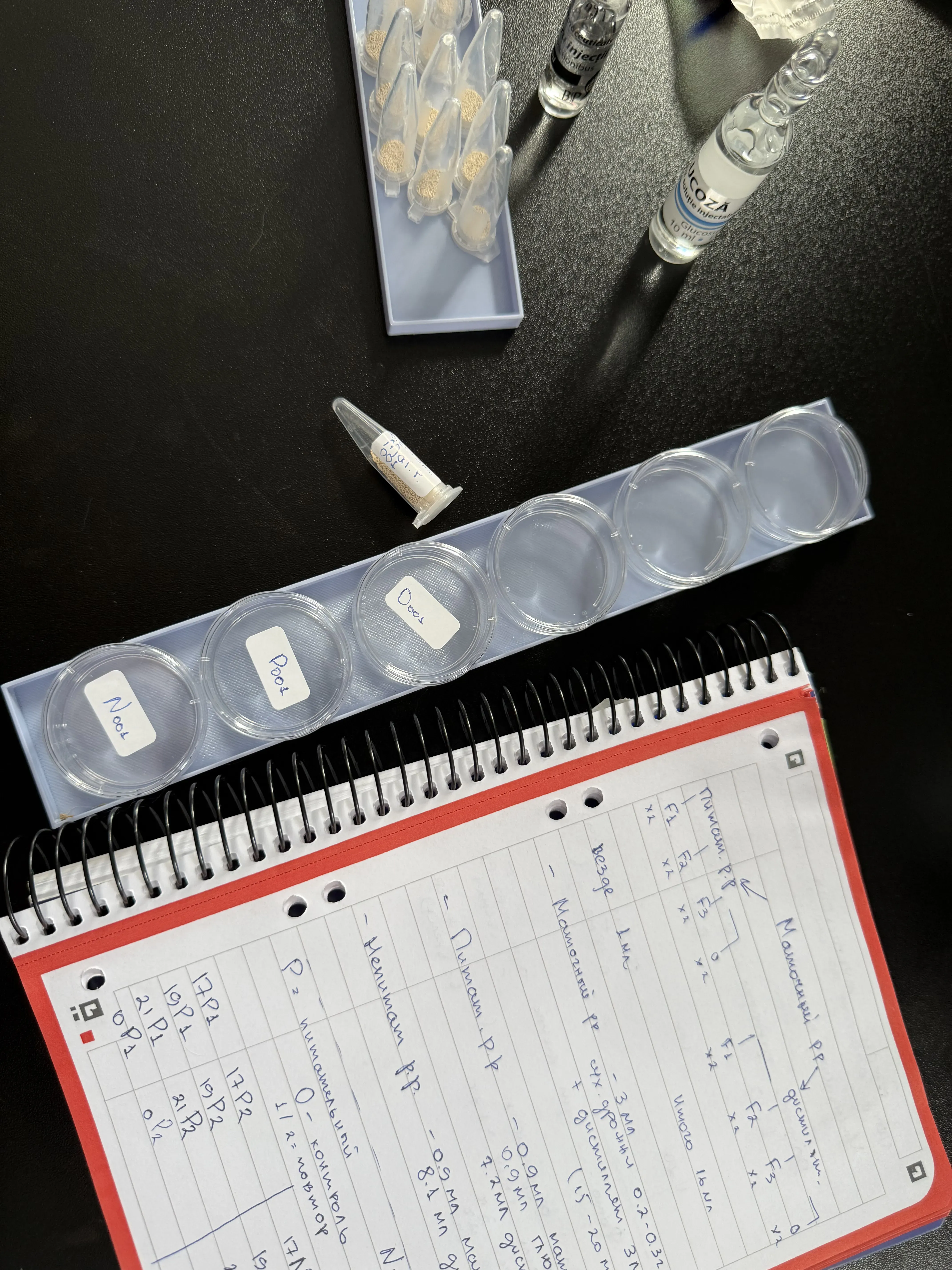
Randomized controlled experiment with double-blind methodology. Samples are distributed via RNG, researchers are unaware of conditions during analysis. Exposure — 80 minutes per session in a controlled environment: basement (-1 floor), complete darkness, 10°C.
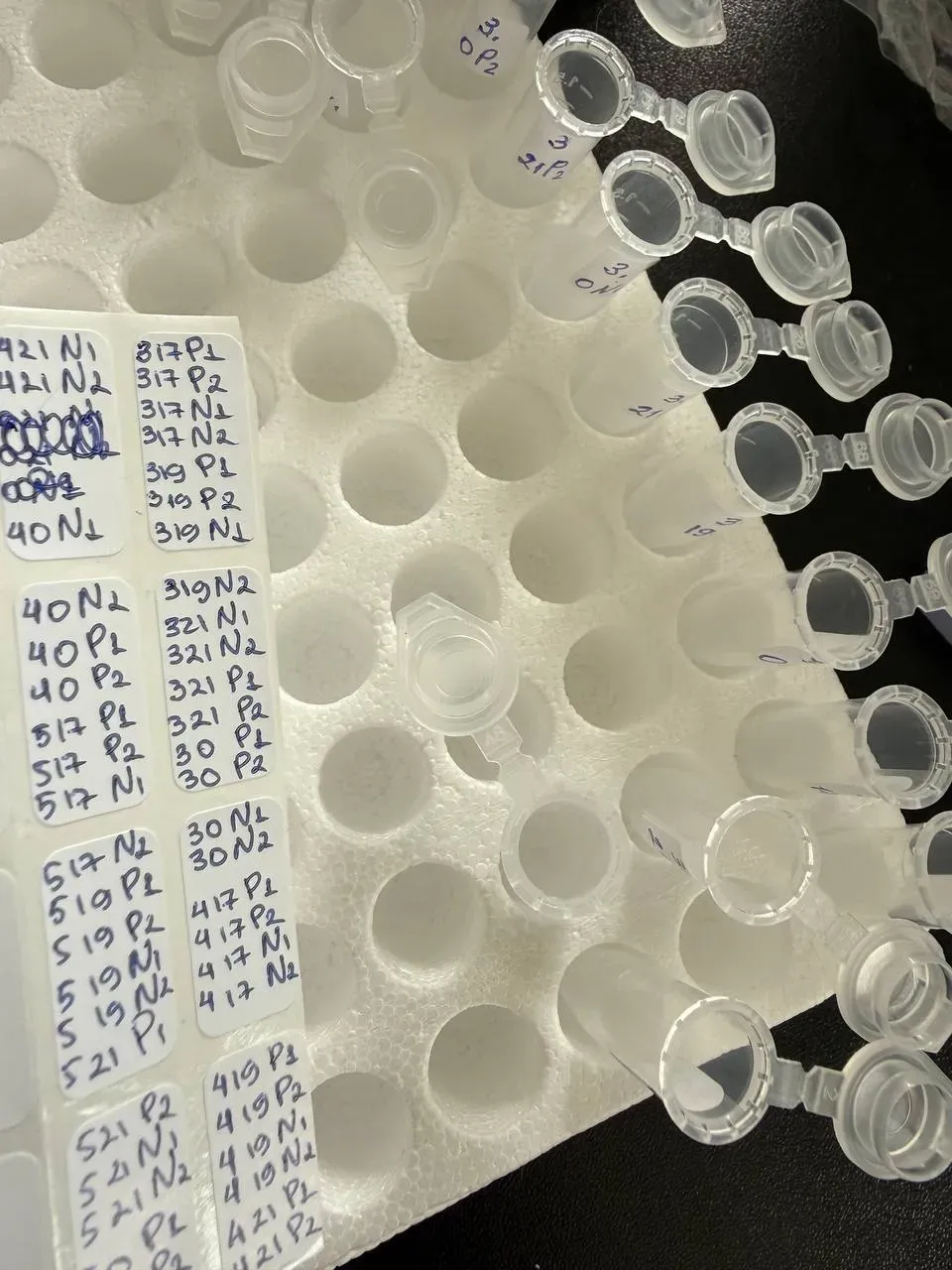
- 5 groups: Control, CH19, CH21, CH17, CH17+CH19 (5–10 independent samples each, N=25–50)
- Double-blind: coded sample identifiers, analysts unaware of conditions until processing is complete
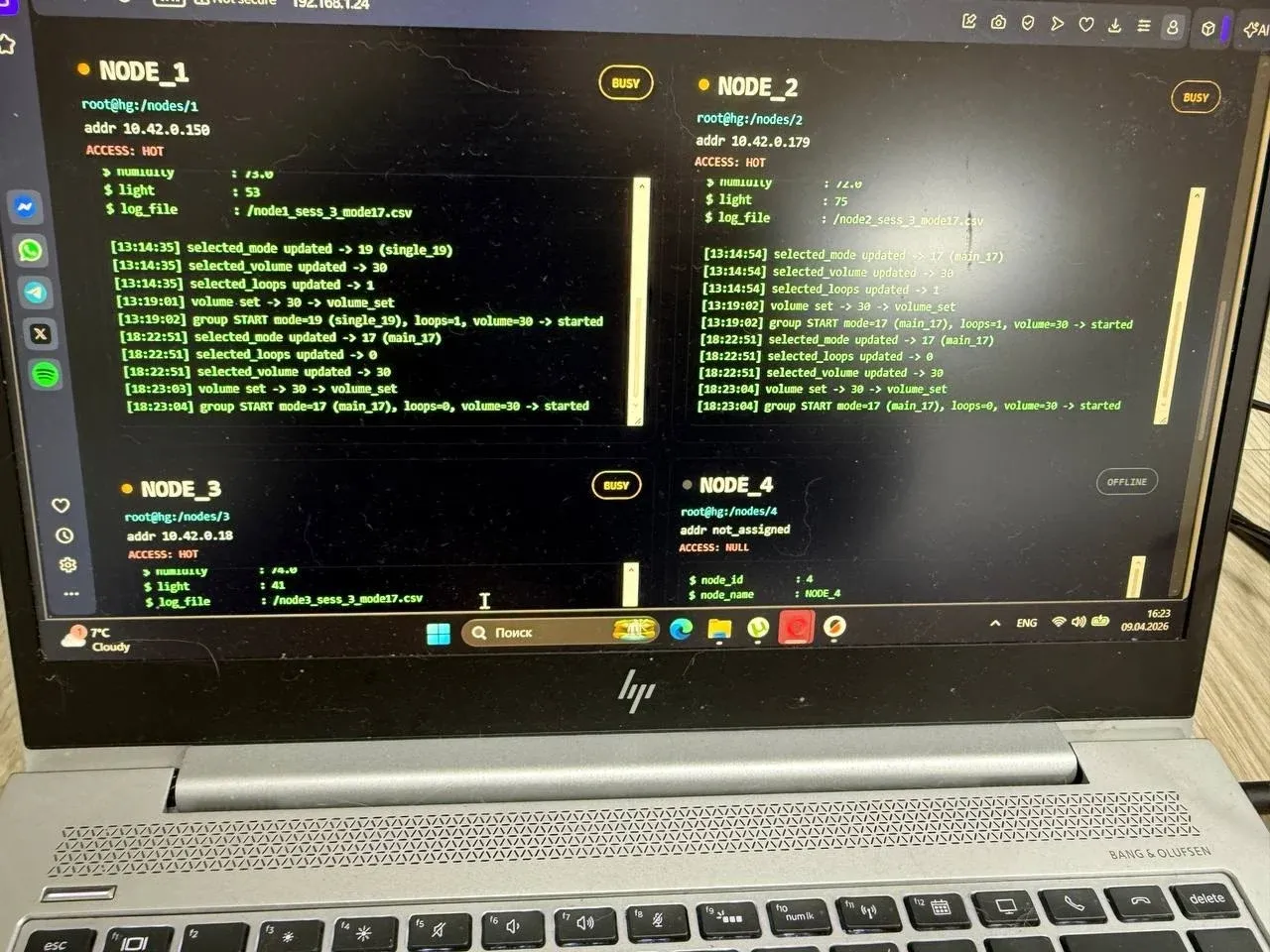
- Automatic logging: 1 measurement per minute, ~80 records per session, Linux system with 1 TB storage
Computer Vision & Data Analysis:
Multi-stage computer vision pipeline for objective assessment of cell viability and dynamics:
- Cellpose3 — noise reduction and elimination of eyepiece photography artifacts
- YeastSAM — cell segmentation with 72% accuracy for budding cells
- AMiGA — growth curve construction via Gaussian processes, non-parametric phase fitting
- Statistics: linear mixed model (LME), Tukey post-hoc, Kruskal-Wallis test, p < 0.05
Patents & Registration
Fractal Biomedical System
This research is associated with patent KZ 2025/1095.1 (Fractal Biomedical System), currently under substantive examination. All experimental protocols and hypotheses were registered prior to data collection.
OSF: osf.io/vxkum — Research preregistration — 11 hypotheses, CC-BY-NC-ND 4.0 license

Related Studies
This research is part of the ASRP ecosystem, which includes several independent projects studying the effects of hyperbolic fields:
Research Gallery
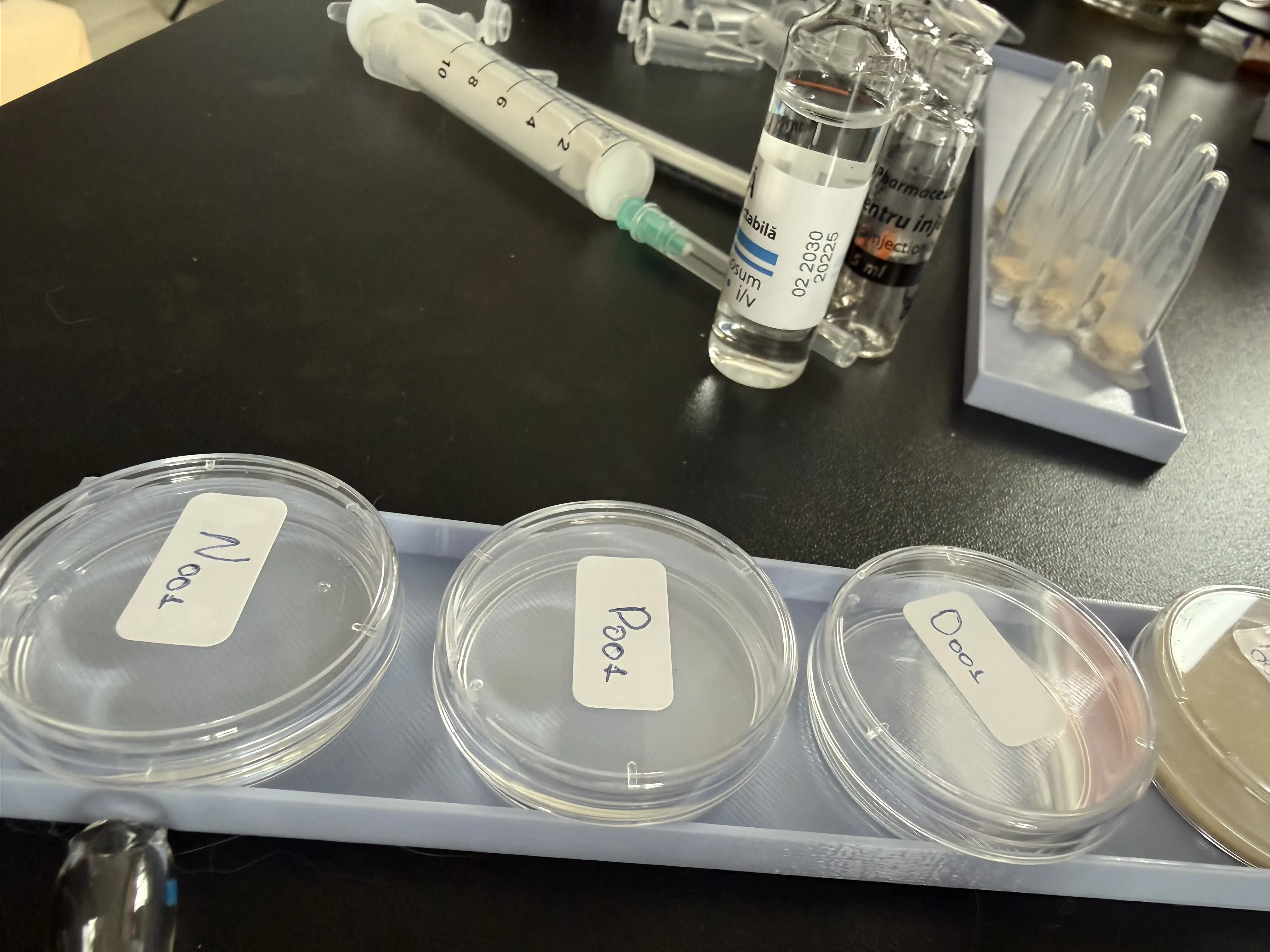
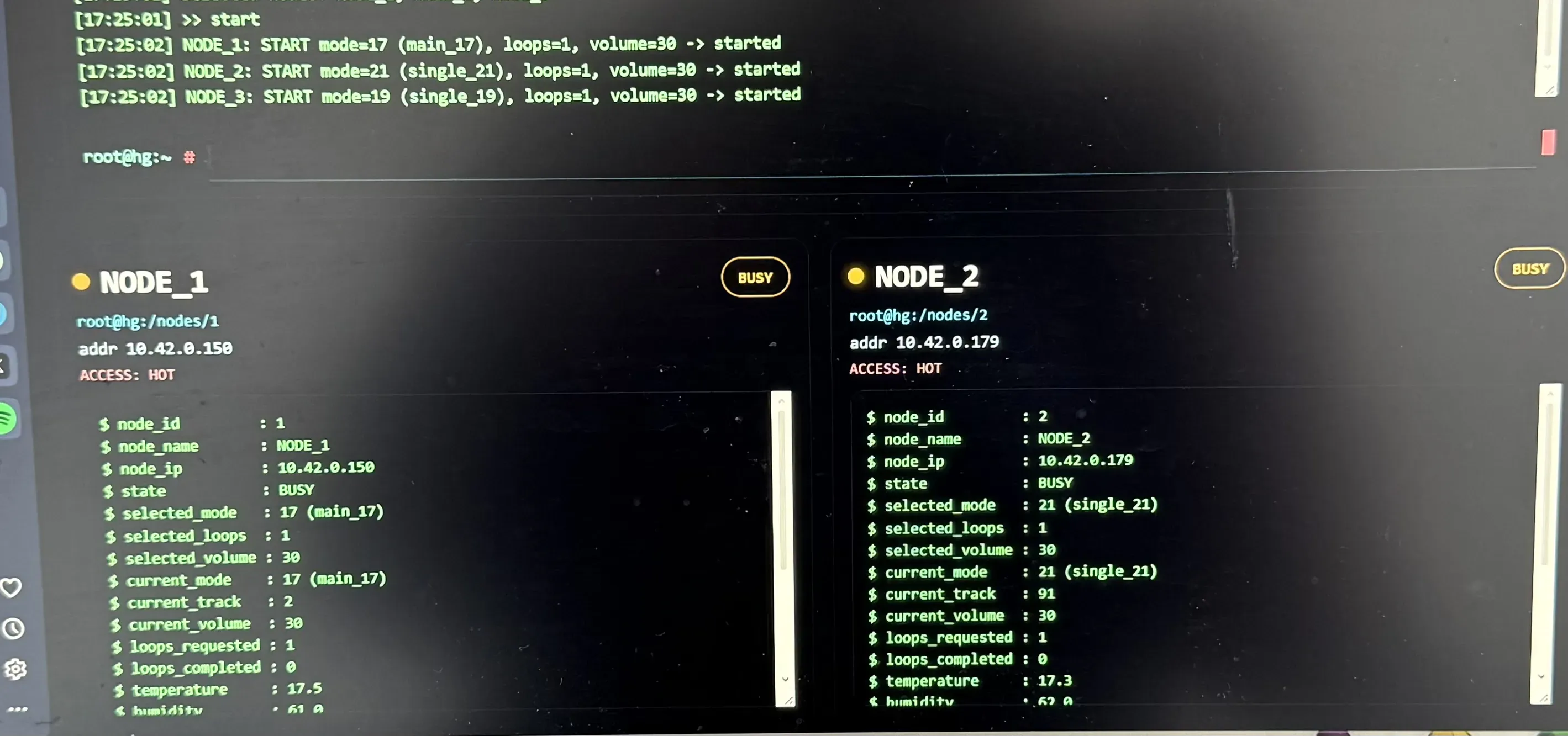
Visual materials from experiments: microscopy, staining, fermentation monitoring, and viability analysis of Saccharomyces cerevisiae cells.
Research Team
This research is conducted under patent KZ 2025/1095.1 (Fractal Biomedical System), filed by ASRP LLP (Baikonur, Kazakhstan).



Galina Ovseannicova
Senior Laboratory Technician
Laboratory support, environment preparation, and protocol stability maintenance.


Kyryl Zmiienko
SAIE (Senior Artificial Intelligence Engineer)
Development and training of machine learning models, including convolutional neural networks (CNN) for spatial pattern analysis, transformer architectures for uncovering complex dependencies in time series, and hybrid models adapted for biomedical signals.

Denis Banchenko
CEO (Chief Executive Officer), Founder ASRP
Project coordination, OSF registration, workflow management. Jointly with Valeria Ovsyannikova, carries out theoretical and conceptual development of the system, as well as high-level irradiation process control logic development, including irradiation mode formation algorithms and adaptive experiment scenarios.
Contact our team
Send us a note to get the conversation started